Matter
Device onboarding, QR code placement, pairing language and fallback support scripts for connected climate devices.
Innovation leader creative page
Ecobee's Smart Living page is built for brands that need more than a hardware catalog. A connected home SKU must explain ecosystem compatibility, installation behavior, support expectations and upgrade pathways. This page gives sourcing teams a practical view of how Ecobee organizes those decisions before a pilot order begins.
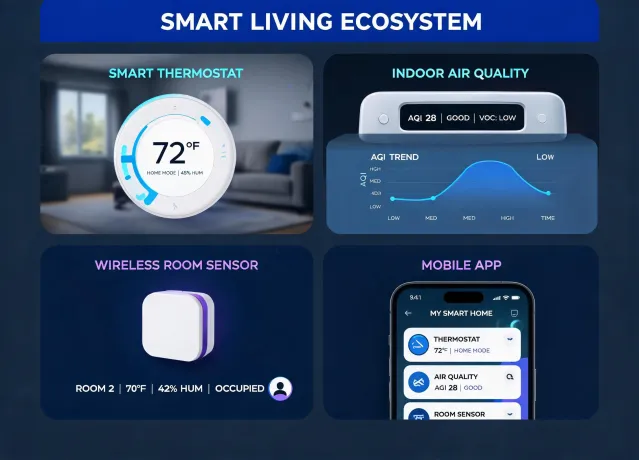
Ecosystem protocol grid
Smart appliance buyers often start with a desired badge, but launch success depends on the experience behind the badge. Ecobee maps onboarding steps, reset flows, app terminology, accessory pairing and customer support language for each selected ecosystem.
Device onboarding, QR code placement, pairing language and fallback support scripts for connected climate devices.
Optional cloud stack planning for buyers who need established app infrastructure and regional service flexibility.
Experience planning for households that expect clean pairing, room naming and privacy-conscious setup language.
Voice and app behavior notes for smart thermostat, room sensor and air quality routines.
Command language, comfort routines and support macros for voice-enabled connected-home programs.
Live demo model
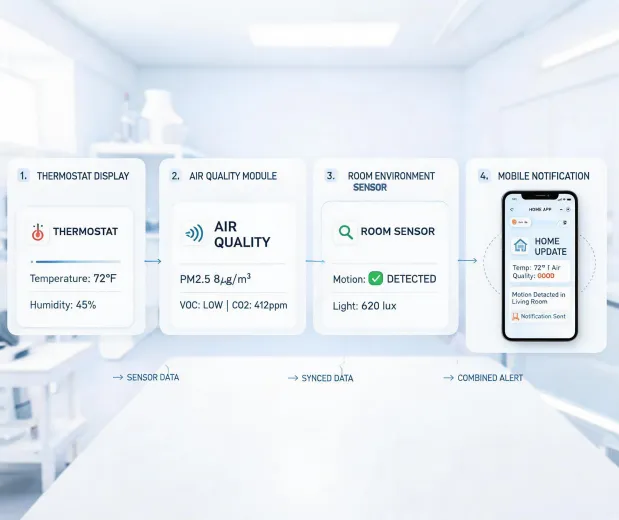
In a typical program, an occupancy sensor, humidity shift or air quality reading triggers thermostat behavior and app messaging. Ecobee helps buyers decide which actions should be automatic, which should be user-confirmed and which should simply create a support or maintenance cue. That disciplined mapping reduces confusing experiences after the product reaches homes.
Smart Living RFQ
Tell us which platforms, app experience, accessory bundle and support model matter most. Ecobee can then suggest a SKU path that fits your channel instead of overloading a thermostat with features your buyers will not use. This keeps pilot budgets, documentation and support teams aligned from the beginning.